
Stretching and Flexibility Exercises
Introduction
Stretching and flexibility exercises are fundamental components of therapeutic exercise programs in physiotherapy and rehabilitation. They are designed to restore, maintain, and optimize the extensibility of muscles, tendons, fascia, joint capsules, and other periarticular structures. Restricted flexibility is a common consequence of injury, immobilization, pain, neuromuscular dysfunction, aging, and prolonged postural stress, and it significantly contributes to altered movement patterns, functional limitation, and pain.
Within clinical practice, stretching is not a generic activity but a targeted intervention that must be prescribed based on tissue pathology, stage of healing, neuromuscular control, and functional demands. When applied systematically and appropriately, flexibility training enhances movement efficiency, reduces injury risk, and supports optimal performance in both daily activities and high-demand tasks.
Definition
Stretching and flexibility exercises are defined as therapeutic techniques intended to increase the length and extensibility of soft tissues, thereby improving joint range of motion and movement quality.
Flexibility refers to the capacity of a muscle–tendon unit or joint system to move through an unrestricted, pain-free range, while stretching refers to the deliberate application of force to achieve this extensibility.
Therapeutic Objectives and Clinical Rationale
The primary objectives of stretching and flexibility exercises include:
- Increasing muscle and connective tissue extensibility
- Restoring normal joint range of motion
- Reducing muscle stiffness and tone abnormalities
- Improving posture and movement alignment
- Decreasing pain associated with soft tissue tightness
- Enhancing functional movement efficiency
- Preventing secondary musculoskeletal complications
- Preparing tissues for strengthening and functional loading
Clinically, restricted flexibility often coexists with weakness, poor motor control, and pain. Addressing flexibility deficits is therefore essential for comprehensive rehabilitation and injury prevention.
Mechanism of Action
The effects of stretching are mediated through both mechanical and neurophysiological mechanisms:
Viscoelastic Tissue Adaptation
Prolonged or repeated stretching leads to changes in the viscoelastic properties of muscle–tendon units, allowing greater length at lower resistance.
Sarcomere Adaptation
Chronic stretching may promote the addition of sarcomeres in series, particularly in immobilized or shortened muscles.
Neurophysiological Modulation
Stretching influences muscle spindle sensitivity and reflex activity, reducing excessive muscle tone and stretch reflex excitability.
Pain Modulation
Gentle stretching may reduce pain through improved circulation, reduced ischemia, and modulation of nociceptive input.
Movement Repatterning
Improved tissue extensibility allows more efficient joint mechanics and reduces compensatory movement strategies.
Indications and Clinical Applications
Stretching and flexibility exercises are indicated in a wide range of conditions:
Orthopedic and Musculoskeletal Conditions
- Post-immobilization stiffness
- Muscle tightness and contractures
- Tendinopathies and overuse injuries
- Postural syndromes
- Degenerative joint conditions
Neurological Rehabilitation
- Spasticity and hypertonicity
- Reduced selective motor control
- Post-stroke muscle shortening
- Upper motor neuron syndromes
Sports and Exercise Rehabilitation
- Injury prevention programs
- Muscle imbalance correction
- Return-to-sport preparation
Geriatric Rehabilitation
- Age-related loss of flexibility
- Functional mobility limitations
- Fall risk reduction
Pediatric Rehabilitation
- Developmental muscle tightness
- Neuromuscular disorders
Contraindications and Precautions
Absolute Contraindications
- Acute muscle or tendon rupture
- Acute inflammatory conditions
- Unstable fractures or joints
- Recent surgical repair where stretching is prohibited
Relative Contraindications / Precautions
- Severe osteoporosis
- Acute pain aggravated by stretch
- Joint hypermobility
- Neurological conditions with high tone or clonus
Stretching should always respect tissue healing timelines and patient tolerance.
Assessment Prerequisites
Before prescribing stretching exercises, the therapist should assess:
- Joint range of motion (active and passive)
- Muscle length and extensibility
- End-feel characteristics
- Pain response and irritability
- Posture and movement patterns
- Functional limitations related to tightness
Assessment findings guide stretch selection, intensity, and duration.
Principles of Stretching and Flexibility Training
Effective stretching programs follow these principles:
- Stretch only tissues that are demonstrably restricted
- Ensure proper joint alignment and stabilization
- Apply slow, controlled stretch without ballistic force
- Maintain stretch within pain-free or tolerable limits
- Emphasize breathing and relaxation
- Progress gradually based on tissue response
- Integrate stretching with strengthening and motor control training
Stretching should support function, not compromise joint stability.
Types of Stretching Techniques
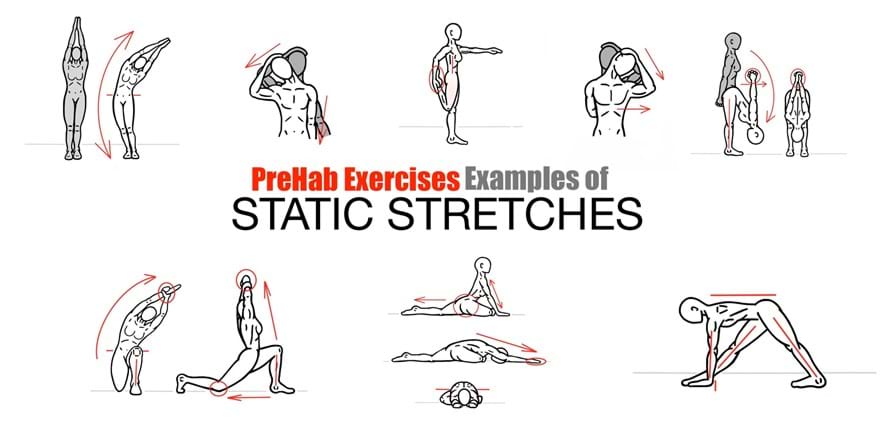


4
Static Stretching
The muscle is elongated to a tolerable end range and held for a sustained period. Commonly used in rehabilitation and flexibility maintenance.
Passive Stretching
An external force (therapist, gravity, or equipment) moves the muscle into stretch without active patient effort.
Active Stretching
The patient actively contracts the antagonist muscle to stretch the target muscle.
Proprioceptive Neuromuscular Facilitation (PNF) Stretching
Combines muscle contraction and relaxation techniques to enhance flexibility through neurophysiological mechanisms.
Dynamic Stretching
Controlled movement through available range, often used as part of functional warm-up or advanced rehabilitation.
Dosage Parameters
General dosage guidelines include:
- Duration: 15–60 seconds per stretch
- Repetitions: 2–5 per muscle group
- Sets: 1–3
- Frequency: Daily or at least 3–5 times per week
- Intensity: Mild to moderate stretch sensation without pain
Chronic flexibility changes require consistent, long-term application.
Integration into Rehabilitation Programs
Stretching exercises are integrated with:
- Range of motion and joint mobilization techniques
- Strength and conditioning programs
- Proprioceptive and balance training
- Postural correction strategies
- Functional and task-specific training
Stretching is most effective when followed by active movement or strengthening to reinforce newly gained range.
Outcome Measures and Monitoring
Progress is monitored using:
- Goniometric measurements
- Muscle length testing
- Functional movement observation
- Patient-reported stiffness and ease of movement
- Pain and tolerance scales
Documentation should reflect changes in range, comfort, and functional performance.
Advantages and Limitations
Advantages
- Improves joint mobility and movement quality
- Reduces muscle stiffness and discomfort
- Low cost and easy to implement
- Adaptable across populations
Limitations
- Limited impact without concurrent strengthening
- Overstretching may reduce joint stability
- Effects may be temporary without reinforcement
- Requires patient adherence for long-term benefit
Clinical Pearls
- Stretching should be purposeful, not routine
- Gain range where it is functionally needed
- Avoid aggressive stretching in early healing phases
- Follow stretching with active control exercises
- Flexibility without strength increases injury risk
Conclusion
Stretching and flexibility exercises are essential therapeutic tools for restoring soft tissue extensibility, optimizing joint mechanics, and supporting functional movement. When prescribed based on careful assessment and integrated into comprehensive rehabilitation programs, they contribute significantly to pain reduction, movement efficiency, and long-term musculoskeletal health.
References
- Kisner C, Colby L, Borstad J. Therapeutic Exercise: Foundations and Techniques.
- Magee D. Orthopedic Physical Assessment.
- McArdle WD, Katch FI, Katch VL. Exercise Physiology.
- Shumway-Cook A, Woollacott M. Motor Control.
- Behm DG, Chaouachi A. A review of the acute effects of static and dynamic stretching. Eur J Appl Physiol.