
Strength and Conditioning Training Program
Introduction
Strength and conditioning training programs represent an advanced, integrative phase of therapeutic exercise prescription aimed at optimizing physical capacity, functional performance, and long-term resilience. In rehabilitation sciences, strength and conditioning extends beyond isolated muscle strengthening to encompass systematic development of strength, power, endurance, neuromuscular control, mobility, and metabolic conditioning, all aligned with functional and occupational demands.
Within physiotherapy practice, a well-designed strength and conditioning program bridges the gap between clinical rehabilitation and full functional reintegration. It is applicable not only in sports rehabilitation but also in orthopedic recovery, neurological rehabilitation, cardiopulmonary conditioning, geriatric care, and community-based health promotion. The emphasis is on safe load exposure, movement quality, and progressive adaptation guided by clinical reasoning and evidence-based principles.
Definition
A strength and conditioning training program is defined as a structured, progressive exercise framework designed to enhance muscular strength, power, endurance, neuromuscular coordination, and overall physical performance, while minimizing injury risk and supporting functional goals.
Key defining characteristics include:
- Systematic load progression
- Integration of multi-joint and functional movements
- Emphasis on movement quality and control
- Individualization based on assessment and goals
- Long-term physical capacity development
Therapeutic Objectives and Clinical Rationale
The primary objectives of strength and conditioning programs include:
- Restoring and enhancing muscular strength and endurance
- Improving power generation and rate of force development
- Enhancing neuromuscular coordination and movement efficiency
- Increasing load tolerance of muscles, tendons, and joints
- Improving postural control and dynamic stability
- Enhancing cardiovascular and metabolic conditioning
- Reducing risk of re-injury and chronic pain recurrence
- Supporting return to work, sport, and daily activities
Clinically, strength and conditioning programs are essential once foundational range of motion, motor control, and basic strength have been restored, enabling safe exposure to higher physical demands.
Mechanism of Action
The adaptations achieved through strength and conditioning training occur through multiple interacting mechanisms:
Neural Adaptations
Improved motor unit recruitment, synchronization, and firing frequency enhance force production and movement efficiency.
Muscular Adaptations
Hypertrophy, improved fiber-type recruitment, and increased oxidative capacity contribute to strength and endurance gains.
Tendon and Connective Tissue Adaptation
Progressive loading improves tendon stiffness, tensile strength, and energy storage capacity, enhancing force transmission and joint stability.
Metabolic and Cardiovascular Adaptations
Improved mitochondrial density, capillarization, and aerobic capacity support sustained physical activity and recovery.
Motor Control and Skill Acquisition
Repeated functional movement patterns enhance coordination, timing, and task-specific performance.
Indications and Clinical Applications
Strength and conditioning programs are indicated across diverse clinical populations:
Orthopedic Rehabilitation
- Postoperative joint reconstruction
- Chronic musculoskeletal pain conditions
- Degenerative joint disease
- Return-to-work conditioning
Neurological Rehabilitation
- Stroke recovery (advanced strengthening and conditioning)
- Incomplete spinal cord injury
- Traumatic brain injury
- Neurodegenerative conditions (capacity-focused training)
Sports Rehabilitation
- Return-to-sport reconditioning
- Performance restoration
- Injury prevention programs
Geriatric Rehabilitation
- Sarcopenia management
- Frailty reversal
- Fall prevention and functional independence
Cardiopulmonary Rehabilitation
- Peripheral muscle conditioning
- Exercise tolerance improvement
- Functional endurance training
Contraindications and Precautions
Absolute Contraindications
- Unstable medical or cardiopulmonary conditions
- Acute musculoskeletal injury or inflammation
- Uncontrolled pain
- Recent surgery with strict load restrictions
Relative Contraindications / Precautions
- Severe osteoporosis
- Joint instability
- Neurological fatigue sensitivity
- Poor movement control
- Cognitive limitations affecting safety
Programs must be adapted to ensure safety and adherence.
Assessment Prerequisites
Comprehensive assessment prior to program design should include:
- Joint range of motion and mobility
- Muscle strength and endurance
- Movement quality and biomechanical alignment
- Balance and postural control
- Cardiovascular tolerance
- Pain response and recovery capacity
- Functional task demands and goals
Assessment findings inform exercise selection, loading strategies, and progression timelines.
Principles of Strength and Conditioning Program Design
Effective program design is guided by core training principles:
Specificity
Adaptations are specific to the muscles, movement patterns, and energy systems trained.
Progressive Overload
Load, volume, or complexity must increase gradually to stimulate adaptation.
Individualization
Programs must reflect the individual’s condition, goals, and tolerance.
Variation and Periodization
Planned variation prevents plateau and overuse injury.
Recovery and Load Management
Adequate rest and monitoring prevent overtraining and symptom exacerbation.
Components of a Strength and Conditioning Program

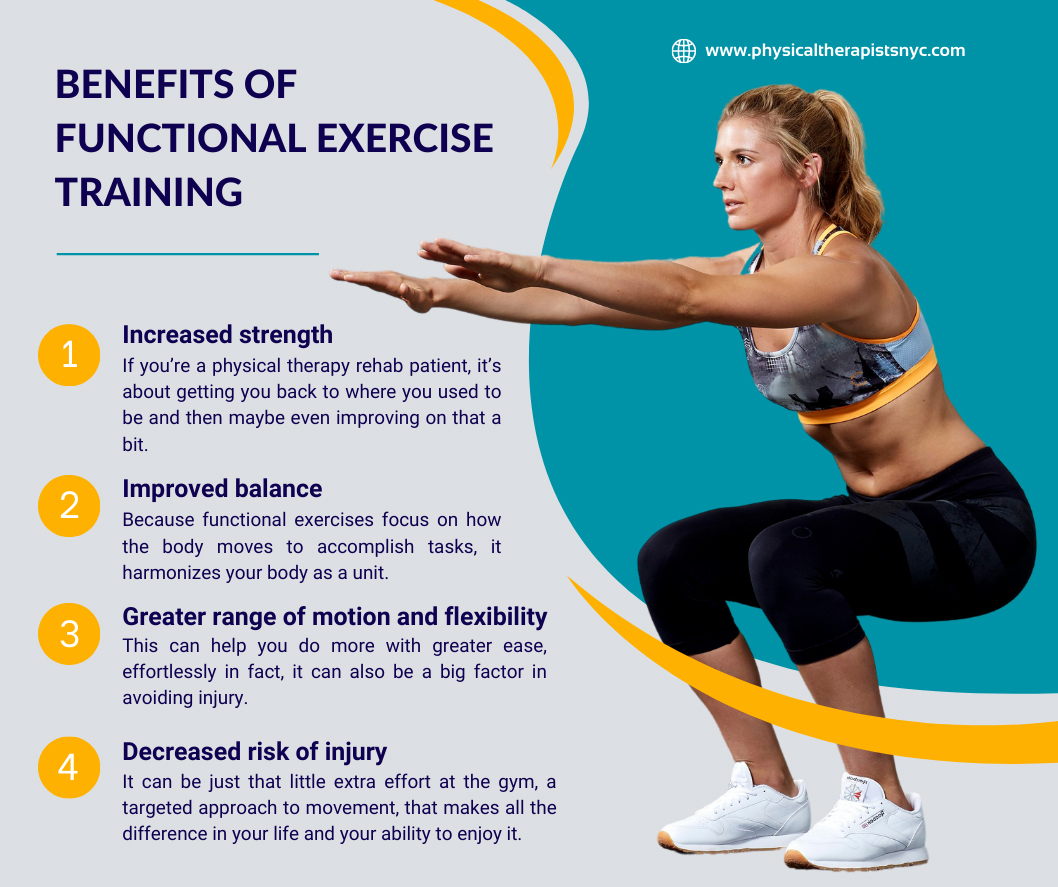

4
Strength Training
- Multi-joint and single-joint resistance exercises
- Emphasis on functional movement patterns
Power Training
- Controlled speed and explosive intent where appropriate
- Relevant for return-to-sport or occupational tasks
Muscular Endurance Training
- Higher repetition, lower load strategies
- Functional task repetition
Neuromuscular and Stability Training
- Core stabilization
- Dynamic joint control
Conditioning and Aerobic Training
- Interval or continuous conditioning
- Integrated with resistance training
Mobility and Recovery Strategies
- Flexibility maintenance
- Active recovery techniques
Dosage Parameters
General programming guidelines vary by goal:
Strength-Focused
- Intensity: 60–85% of maximum capacity
- Repetitions: 4–10
- Sets: 2–5
- Frequency: 2–3 sessions per week
Endurance-Focused
- Intensity: Low to moderate
- Repetitions: 12–25
- Sets: 1–3
- Frequency: 3–5 sessions per week
Conditioning
- Duration: 20–45 minutes
- Intensity: Symptom-guided and goal-specific
Progression should be systematic and reassessed regularly.
Methods of Progression
Progression may be achieved through:
- Increasing resistance or load
- Increasing volume (sets or repetitions)
- Increasing movement complexity
- Reducing external support
- Increasing speed or power demands
- Integrating task-specific challenges
Progression should align with tissue healing and functional milestones.
Integration into Rehabilitation and Return-to-Function
Strength and conditioning programs are integrated with:
- Manual therapy and mobility interventions
- Proprioceptive and balance training
- Functional task simulation
- Ergonomic and activity modification
- Education on load management and self-monitoring
They serve as the final preparatory stage before discharge or return to full activity.
Outcome Measures and Monitoring
Effectiveness is monitored using:
- Strength and endurance testing
- Functional performance assessments
- Cardiovascular fitness measures
- Patient-reported outcome measures
- Observation of movement quality and fatigue response
Regular monitoring ensures safe and effective progression.
Advantages and Limitations
Advantages
- Comprehensive physical capacity development
- Strong evidence for functional improvement
- Reduces re-injury risk
- Enhances long-term independence and performance
Limitations
- Requires careful supervision initially
- Risk of overload if poorly managed
- Dependent on patient adherence
- May require equipment or space
Clinical Pearls
- Conditioning is as important as strength
- Movement quality precedes load progression
- Functional relevance improves transfer
- Fatigue management is critical in rehabilitation populations
- Long-term resilience requires ongoing conditioning
Conclusion
Strength and conditioning training programs are an essential extension of therapeutic exercise, transforming rehabilitation gains into sustainable functional capacity. When designed with sound assessment, progressive loading, and functional relevance, these programs support safe return to activity, reduce recurrence of injury, and promote lifelong physical health.
References
- Kisner C, Colby L, Borstad J. Therapeutic Exercise: Foundations and Techniques.
- McArdle WD, Katch FI, Katch VL. Exercise Physiology.
- American College of Sports Medicine. ACSM Guidelines for Exercise Testing and Prescription.
- Braddom RL. Physical Medicine and Rehabilitation.
- Behm DG, Sale DG. Intended rather than actual movement velocity determines velocity-specific training response. J Appl Physiol.