
Generating PDF... Please wait
Preparing document
PATIENT EDUCATION: EFFECTIVE USE OF WALKER
वॉकर का प्रभावी उपयोग
WHAT IS A WALKER? | वॉकर क्या है?
A walker is a mobility aid used to provide external support to patients with difficulty in walking due to weakness, pain, surgery, or poor balance. It ensures independence and safety.
वॉकर एक सहायक उपकरण है जो चलने में कठिनाई वाले रोगियों को बाहरी सहारा प्रदान करता है। इसका उपयोग स्वतंत्रता और सुरक्षा सुनिश्चित करने के लिए किया जाता है।
It helps in: | वॉकर के उपयोग से:
निचले अंगों पर भार कम होता है
संतुलन बेहतर होता है और गिरने से बचाव होता है
सर्जरी के बाद चलने में सहायता मिलती है
HOW TO WALK WITH A WALKER | वॉकर के साथ कैसे चलें
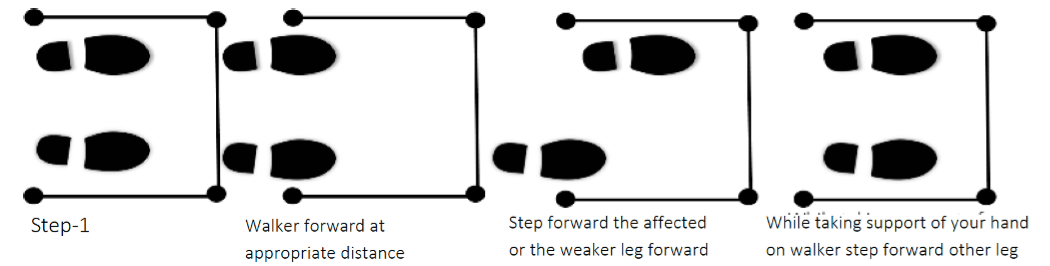
Move the walker about an arm's length forward.
Hindi: वॉकर को एक हाथ की दूरी तक आगे बढ़ाएं।
Ensure all four legs of the walker touch the ground.
Hindi: सुनिश्चित करें कि वॉकर के चारों पैर ज़मीन पर टिके हों।
Step forward with the weaker or operated leg first.
Hindi: पहले कमजोर या ऑपरेशन वाले पैर को आगे रखें।
Then move the stronger leg forward past the weaker one.
Hindi: फिर मजबूत पैर को आगे लाएं।
Repeat and maintain upright posture.
Hindi: इन्हें दोहराएं और सीधी मुद्रा बनाए रखें।
Do not step too close to the front bar. Maintain safe distance.
Hindi: वॉकर की सामने की पट्टी के बहुत पास न चलें।
WEIGHT BEARING INSTRUCTIONS | पैर पर वजन डालने की दिशा-निर्देश
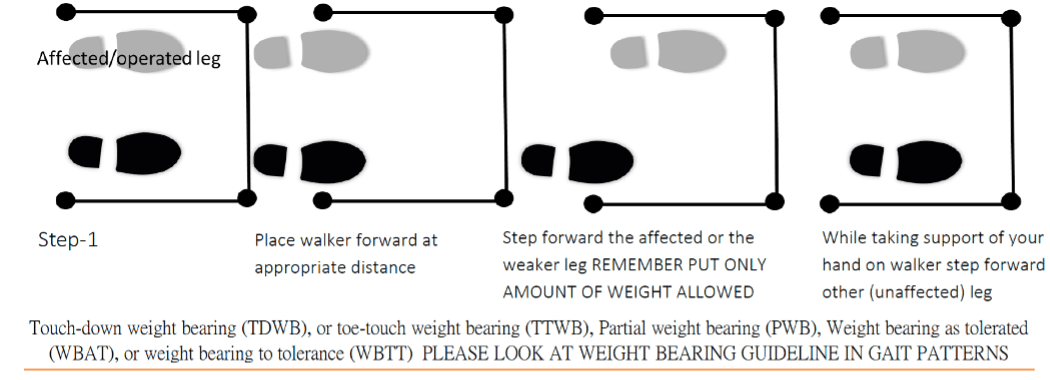
| Gait Pattern | Hindi Description | Explanation |
|---|---|---|
| Non-Weight Bearing (NWB) | बिना वजन डाले चलना | Affected leg must not touch the floor |
| Touch-Down/Toe-Touch (TDWB/TTWB) | केवल ज़मीन छूना | Only for balance, no weight |
| Partial Weight Bearing (PWB) | आंशिक वजन डालना | Put some percentage of weight (e.g., 25–50%) |
| Weight Bearing As Tolerated (WBAT) | जितना सह सके उतना वजन डालना | As much as pain allows |
| Full Weight Bearing (FWB) | पूरा वजन डालना | Put full body weight on the affected leg |

Always follow the instruction of your doctor/physiotherapist.
Hindi: हमेशा अपने डॉक्टर या फिजियोथेरेपिस्ट की सलाह का पालन करें।
HOW TO SIT WITH A WALKER | वॉकर के साथ बैठने की विधि
-
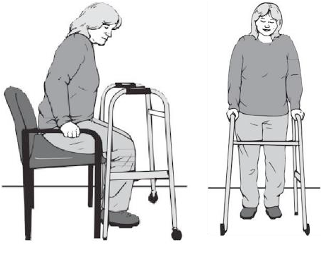
Back up until legs touch the seat.
बैठने की जगह से तब तक पीछे आएं जब तक कि टाँगें उससे छू न जाएं। -
Ensure walker is stable and on ground.
सुनिश्चित करें कि वॉकर स्थिर और ज़मीन पर हो। -
Reach back with one hand, hold armrest, and slowly sit.
एक हाथ से पीछे की कुर्सी का हत्था पकड़ें और धीरे बैठें।
Always check that the chair is stable and won't move before sitting. Use chairs with armrests whenever possible.
HOW TO STAND WITH A WALKER | वॉकर के सहारे खड़े होने की विधि
-
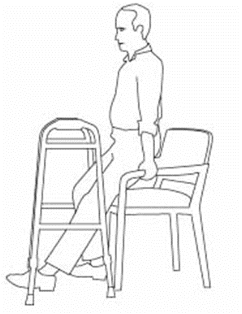
Place walker in front (open side facing you).
वॉकर को सामने रखें (खुली तरफ आपकी ओर हो)। -
Push yourself up from chair armrests, NOT by pulling walker.
कुर्सी के हत्थे से सहारा लें, वॉकर को खींचे नहीं। -
Hold walker handles and stabilize before walking.
वॉकर के हैंडल पकड़ें और संतुलन बनाने के बाद ही चलें।
Never use the walker to pull yourself up from sitting position. This can cause the walker to tip over and lead to a fall.
STEP-BY-STEP WALKING INSTRUCTION | कदम दर कदम चलने के निर्देश
For Weight-Bearing Patients:
- Move walker forward
- Step forward with affected leg
- Then step forward with unaffected leg
- Maintain posture and repeat
For Non-Weight-Bearing (NWB) Patients:
- Move walker forward
- Do not place affected leg on floor
- Step forward with unaffected leg only, bearing weight through hands
Practice walking with your physiotherapist until you feel confident. Start with short distances and gradually increase as you gain strength and balance.
REMEMBER | याद रखें
Always follow weight-bearing instructions from your physiotherapist.
Hindi: हमेशा वजन डालने के निर्देशों का पालन करें।
Do not use walker for pulling or balancing while standing up.
Hindi: उठते समय वॉकर को खींचना या सहारा लेना खतरनाक हो सकता है।
Always use walker on even ground and wear non-slip footwear.
Hindi: समतल ज़मीन पर चलें और फिसलन से बचने वाले जूते पहनें।
If unsure, ask your physiotherapist again for a demonstration.
Hindi: संदेह हो तो फिजियोथेरेपिस्ट से फिर से पूछें।
SPECIAL INSTRUCTIONS
Important: This walker use guide provides general instructions. Always consult with your physiotherapist for personalized guidance. Ensure proper walker height adjustment (elbows slightly bent when holding handles). Check rubber tips regularly for wear and replace when needed. Practice in a safe environment with supervision initially.
विशेष निर्देश: यह वॉकर उपयोग गाइड सामान्य निर्देश प्रदान करती है। व्यक्तिगत मार्गदर्शन के लिए हमेशा अपने फिजियोथेरेपिस्ट से परामर्श करें। वॉकर की ऊंचाई उचित रूप से समायोजित करें (हैंडल पकड़ते समय कोहनी थोड़ी मुड़ी हो)। रबर टिप्स की नियमित जांच करें और आवश्यकता पड़ने पर बदलें। शुरुआत में पर्यवेक्षण के साथ सुरक्षित वातावरण में अभ्यास करें।
The above information is a general guideline. It does not replace the advice of your doctor or physiotherapist.
Always:
- Keep the walker clean and dry
- Check rubber tips regularly for wear
- Adjust height according to your physiotherapist's instructions
- Clear pathways of obstacles before walking
यह जानकारी सामान्य मार्गदर्शन हेतु है। यह आपके डॉक्टर/फिजियोथेरेपिस्ट की सलाह का विकल्प नहीं है।
हमेशा:
- वॉकर को साफ और सूखा रखें
- रबर टिप्स की नियमित जांच करें
- फिजियोथेरेपिस्ट के निर्देशानुसार ऊंचाई समायोजित करें
- चलने से पहले रास्ते से बाधाएं हटाएं