
Myofascial Release (MFR) Technique
Introduction
Myofascial Release (MFR) is a manual therapy approach widely employed in physiotherapy and rehabilitation to address dysfunctions of the myofascial system—an interconnected network of fascia, muscles, and neurovascular structures that plays a central role in movement efficiency, postural alignment, and force transmission. Myofascial restrictions may develop following trauma, surgery, inflammation, immobilization, repetitive strain, or chronic postural stress, often contributing to pain, movement limitation, and altered motor control.
Within contemporary rehabilitation practice, MFR is applied as a targeted intervention to reduce abnormal fascial tension, restore tissue mobility, and facilitate improved movement patterns. It is frequently integrated with therapeutic exercise, neuromuscular re-education, and postural correction strategies to support durable functional outcomes.
Definition
Myofascial Release is defined as a manual therapy technique involving the application of sustained, low-load, directional pressure or stretch to myofascial tissues to reduce restrictions, improve tissue extensibility, and normalize movement.
Key characteristics include:
- Gentle, sustained pressure rather than forceful manipulation
- Focus on fascia and intermuscular connections
- Patient-specific direction and depth of application
- Emphasis on tissue response rather than therapist force
Therapeutic Objectives and Clinical Rationale
The primary objectives of MFR include:
- Reducing myofascial tightness and adhesions
- Improving tissue extensibility and glide
- Decreasing pain and tenderness
- Restoring normal movement patterns
- Improving postural alignment
- Enhancing circulation and tissue hydration
- Preparing tissues for active movement and strengthening
Clinically, myofascial dysfunction often underlies persistent pain and movement restriction even when joint range and muscle strength appear adequate. MFR addresses these less visible but functionally significant tissue restrictions.
Mechanism of Action
The therapeutic effects of MFR are explained through combined biomechanical and neurophysiological mechanisms:
Fascial Viscoelastic Adaptation
Sustained pressure allows time-dependent deformation of fascia, reducing stiffness and restoring extensibility.
Thixotropic Changes
Mechanical loading may alter the viscosity of ground substance within fascia, improving tissue glide.
Neuromodulation
Gentle manual input stimulates mechanoreceptors, reducing nociceptive drive and altering pain perception.
Autonomic Nervous System Regulation
Slow, sustained techniques may downregulate sympathetic activity, contributing to muscle relaxation and pain reduction.
Improved Tissue Hydration and Circulation
Release of restrictions enhances local blood flow and interstitial fluid movement.
Indications and Clinical Applications
MFR is indicated in a broad range of conditions:
Musculoskeletal Conditions
- Chronic myofascial pain syndromes
- Postural dysfunction and overuse injuries
- Neck, shoulder, and low back pain
- Scar tissue following surgery or trauma
Orthopedic Rehabilitation
- Post-immobilization stiffness
- Restricted soft tissue mobility
- Adjacent tissue tightness around joints
Neurological Rehabilitation
- Increased muscle tone and rigidity
- Movement restriction secondary to tone abnormalities
Sports Rehabilitation
- Repetitive strain injuries
- Fascial tightness limiting performance
Geriatric Rehabilitation
- Age-related tissue stiffness
- Mobility limitations affecting function
Contraindications and Precautions
Absolute Contraindications
- Acute infection or inflammation
- Open wounds or unhealed surgical sites
- Malignancy in the treatment area
- Acute fractures
Relative Contraindications / Precautions
- Osteoporosis
- Anticoagulant therapy
- Severe pain sensitivity
- Systemic inflammatory conditions
Pressure should always be adjusted to patient tolerance and tissue response.
Assessment Prerequisites
Prior to MFR application, the therapist should assess:
- Pain location, quality, and behavior
- Tissue texture and mobility
- Movement restrictions and compensations
- Postural alignment
- Functional limitations
- Patient comfort and communication ability
Accurate assessment guides tissue selection and treatment direction.
Principles of Application
Effective MFR application follows these principles:
- Apply slow, sustained pressure
- Follow the direction of tissue resistance
- Maintain constant contact and pressure
- Allow tissue response to guide duration
- Avoid sliding over the skin
- Encourage patient relaxation and breathing
The therapist waits for tissue release rather than forcing movement.
Types of Myofascial Release Techniques
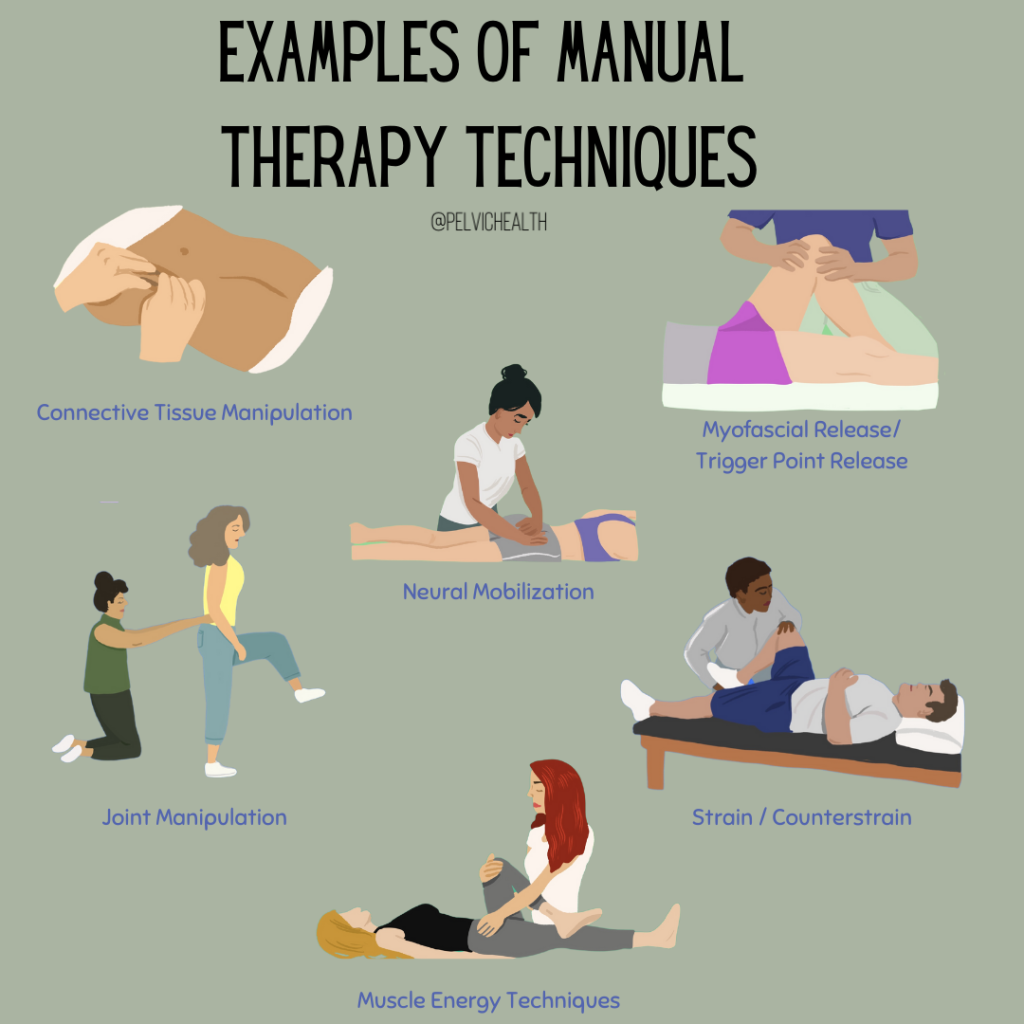

4
Direct Myofascial Release
Engages the restriction directly by applying pressure toward the barrier of resistance.
Indirect Myofascial Release
Moves tissues away from resistance, allowing spontaneous release through tissue relaxation.
Cross-Hand Release
Uses opposing hand contact to stretch fascia across a broad area.
Skin Rolling and Fascial Glide Techniques
Targets superficial fascial restrictions and adhesions.
Instrument-Assisted Fascial Techniques
Use of tools to augment manual release in selected cases.
Dosage Parameters
General guidelines include:
- Duration: 60–120 seconds per restriction
- Pressure: Gentle to moderate, symptom-guided
- Repetitions: As dictated by tissue response
- Frequency: 1–3 sessions per week
Effects are often cumulative and reinforced with movement.
Integration into Rehabilitation Programs
MFR is most effective when integrated with:
- Stretching and flexibility exercises
- Strengthening and conditioning programs
- Proprioceptive and motor control training
- Postural correction strategies
- Functional movement retraining
It is commonly used as a preparatory technique before active exercise.
Outcome Measures and Monitoring
Progress may be monitored using:
- Pain intensity scales
- Palpation of tissue mobility
- Range of motion assessment
- Functional movement analysis
- Patient-reported ease of movement
Immediate and short-term responses should be documented.
Advantages and Limitations
Advantages
- Gentle and well-tolerated
- Addresses fascial contributors to pain
- Enhances movement quality
- Adaptable across populations
Limitations
- Therapist-dependent skill
- Effects may be transient without follow-up exercise
- Limited impact on structural joint restrictions
- Time-intensive in some cases
Clinical Pearls
- Less pressure often produces better results
- Tissue response guides technique duration
- Combine MFR with active movement for lasting benefit
- Avoid aggressive force in irritable tissues
- Fascial restrictions may exist distant from pain site
Conclusion
Myofascial Release is a valuable manual therapy intervention for addressing fascial restrictions that contribute to pain, stiffness, and impaired movement. When applied with precision, patience, and integration into active rehabilitation programs, MFR supports improved tissue mobility, neuromuscular efficiency, and functional recovery.
References
- Barnes JF. Myofascial Release: The Search for Excellence.
- Chaitow L. Fascial Dysfunction: Manual Therapy Approaches.
- Kisner C, Colby L, Borstad J. Therapeutic Exercise: Foundations and Techniques.
- Schleip R, Findley TW, Chaitow L, Huijing PA. Fascia: The Tensional Network of the Human Body.
- Stecco C. Functional Atlas of the Human Fascial System.